|
| We have a bull market alright! |
In October of 2009 cotton was 0.80 cents/pound; on March 4th 2011 cotton was at $2.20/pound. That is a tripling in the price of cotton; and obviously this doesn't happen without a lot of money creation from the central banks. Cotton is up 190% since last fall; does anybody not think that's cause of inflation and thats going to feed through to the price of clothing? Everything uses cotton; socks, t-shirts, underwear, blue jeans. Of course it's not just cotton, it's all fabrics that are getting expensive; so you can't substitute some other material for it. This is just one example of the true cost of increase money supply.
Rising food prices is not the story, it's rising money supply that's the story; which is the reason food prices are rising. It isn't a coincidence, that prices of food is surging to record highs at the same time as money supply's are expanding to record highs. There is a cause in relationship between QE1 and QE2 and whats happening with prices. It's not like all these high prices are a surprise; it's exactly what you would expect based on the monetary policy of the United States. The reason why inflation is global is because the United States has the world reserve currency. What the U.S monetary policy direction is, affects the monetary policies of every other currency so long as the dollar remains the world reserve currency.
3 scapegoats
Scapegoat number one : the weather. The weather has nothing to do with it, there's weather every year. There's always problems in the weather; someones got a flood, drought, freeze.... It happens every year. In the old Soviet Union (Russia) was the bread basket of Europe. When the communist system came in, every year produced a bad harvest and every year they blamed the poor harvest on the weather. It wasn't the weather, it was the communist system that destroyed the incentive of farmers to farm. It is not weather related these surging prices across the board. It's not just this commodity (Wheat) that's rising, it's all commodities that are rising. So the weather is affecting every crop on the planet? Come on.
Scapegoat number two : demand in emerging markets: well we have had demand in emerging markets for centuries; they've been eating for centuries, they didn't just show up. What's changed? Answer : whats changed is all the money they have to spend on food because all the money that central banks are printing.
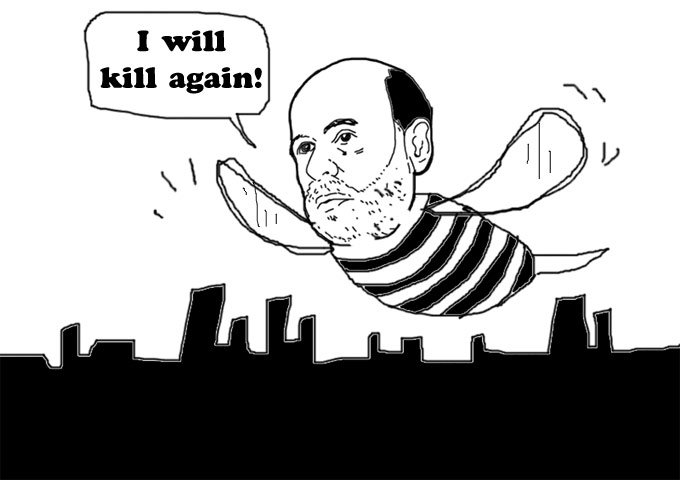
Scapegoat number three : Speculators. Where are the speculators getting all the money to speculate? Answer : from the FED; the critics are not pointing the finger at the real problem and the root cause of global inflation. It's Ben Bernanke, the money he's printing, it's President Obama and Congress that are spending money; the debt that they are issuing that Ben Bernanke is buying. This is a direct consequence of economic stimulus; that's why the world is suffering and that's why Americans are going to suffer in the future!
If we don't make the connection of printing money and rising prices; then it's never going to stop. It seems like it's so obvious, that it's such a obvious connection. If we have more money, then money is less valuable; so prices have to rise. If we keep blaming the inflation problems on the weather, speculators, emerging markets; we are going to keep blaming it on everything but the actual cause which is the Federal Reserve and the deficits that are being created by congress that forces the FED to monetize. They're not required to monetize but we have a FED chairman with no guts!
Global Economy / Global Problems / Naughty FED!
First off, the global economy has been growing; theres currently 5 billion people on the planet. More people are alive today than in the past but this growing trend has been in place for centuries; yet we've never had this "problem" with food. The thing is with more people on the planet means not only more people eating but also more people farming. Also, with advances in science and technology their are more advanced means in growing food with less input. It's not like you've had this huge explosion in people in the last 2 years, no; whats changed is this huge explosion in money supply. Whats changed is the FED's balance sheet being blown out of proportion. What's changed is all these foreign reserves of all these emerging markets central banks printing money to buy up all these FED printed dollars like it's going out of style. That's what's different from now and a couple of years ago; that's why prices are shooting through the roof.
Why doesn't the FED see this you ask? Answer : the FED is not missing it, the FED is just closing it's eyes. The FED doesn't want to acknowledge what they see, because they don't like the picture that's being painted. If the FED admitted it sees inflation, the reaction to that is having to raise interest rates. The minute the FED has to raise interest rates the economy tanks. The only reason why the economy is not tanking already is because it's on artificial life support already by the FED. The trade off consequence of that is to keep this phony economy going, to keep these banks afloat, to keep the real estate prices high we have to create inflation, we have to make prices go up. The FED doesn't want to say that's the trade off; the FED doesn't want to admit they've made a deal with the devil and these are the consequences. So they ignore inflation, they lie; but the problem is they loose all credibility when they look at all this inflation and say it doesn't exist. Of course it exist, but they don't want to deal with it. They don't want to have raise rates, they don't want to force politicians to make real cuts. The problem is we need to get this recession out of the way; the recession is part of the cure. In less we allow the economy to restructure in a way that will create a solid foundation, we will never build a lasting economic recovery; that is the point!

The main goal of QE2 was to bring long term treasury rates down and instead they went up! So, the FED has already lost control of long term rates; noticed in the rising rate. At some point the long end yield curves will get out of control. When the FED loses control of short term rates; is when it will be forced to monetize not only treasuries but other short term commercial paper. Because at some point when inflation gets so high, nobody will want to buy any short term paper and then what is the FED going to do? If the FED doesn't raise rates then nobody will be able to borrow cause the current rate for borrowing is 0%; unless the FED lends to everybody and then of course the FED becomes the buyer of only resort and not the buyer of last resort and that's it for the dollar index! If the FED raised rates right now then the recession will start right now and that would be bad for any political representative trying to get re-elected like the President. Because when it comes to politics it's all about postponing, delaying, even if the delay exacerbates the problem; that doesn't bother a politician. A politicians biggest problem is getting through the next election. He doesn't care how much long term damage he does to the economy in reaching his own goals. Unfortunately the central bankers are working in partnership with the politicians, they're buddy buddy; they're helping them get re-elected instead of being the independent central bankers they were appointed to be. The central bankers are not playing the role of the adult in the room. Instead the bankers are the life of the party, they've got the lamp shade on their head and they're spiking the punch bowl! There is a party in DC and I haven't got a invite....
Uncle Ben is Numb to Global Inflation